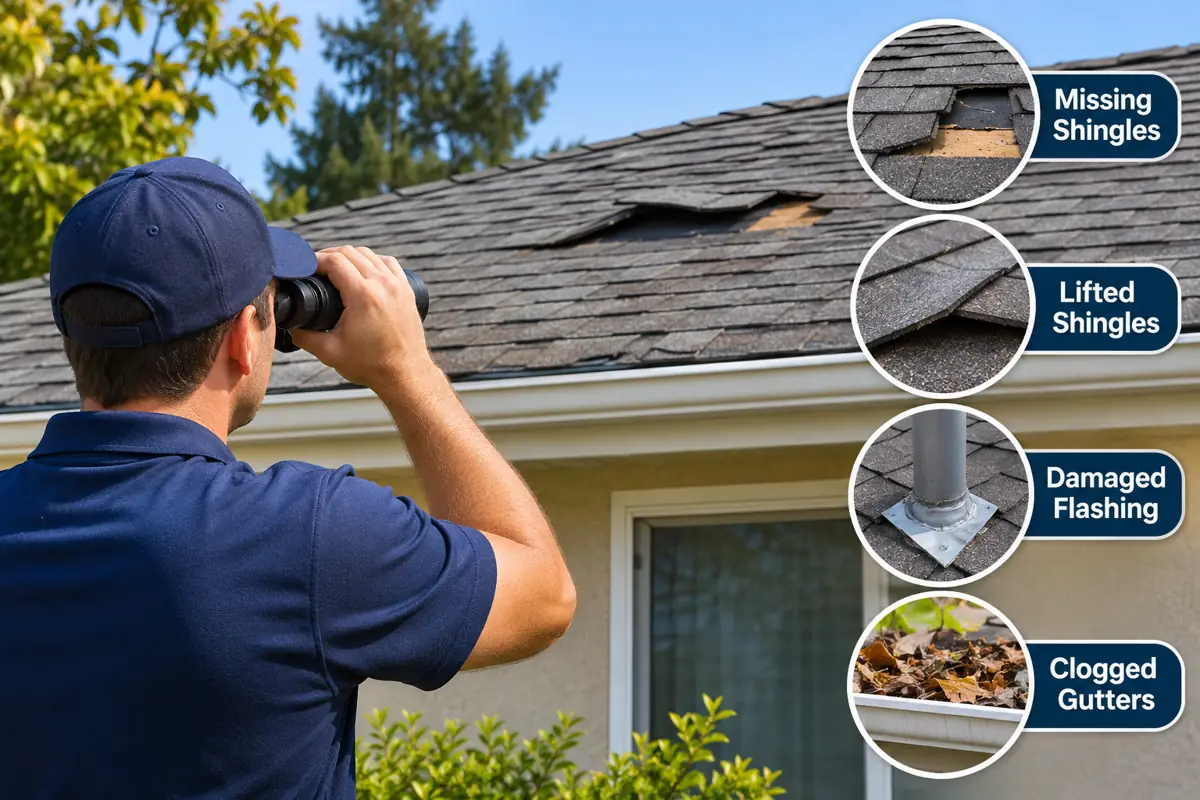
How to Check Your Roof for Storm and Wind Damage
A strong windstorm can damage your roof without leaving obvious signs inside your home. You might notice a few shingles in the yard, loose flashing near the chimney, or nothing unusual at all. The real damage may not become apparent until the next rainfall.
For homeowners in Lakewood, CA, checking the roof after strong winds or heavy rain is a smart way to catch problems early. Loose shingles, damaged flashing, and clogged gutters can allow water to enter areas that were previously protected.
The good news is that you don’t need to climb onto your roof to spot many common warning signs.
Here’s how to check your roof for storm and wind damage, what to look for, and when professional roof repair may be necessary.
What Does Storm and Wind Damage Look Like on a Roof?
Storm damage doesn’t always mean missing shingles or a visible hole. Wind can lift roofing materials, loosen fasteners, and damage flashing without completely removing them.
Some of the most common signs include:
- Missing, cracked, or lifted shingles
- Loose or displaced roof tiles
- Bent or detached metal flashing
- Roofing debris scattered around the yard
- Damaged gutters and downspouts
- Water stains on ceilings or attic framing
- Exposed roofing underlayment
Even minor damage deserves attention, particularly before another storm arrives.
1. Inspect Your Roof From the Ground
Start by walking around your property and looking at the roof from different angles.
Choose a clear day with good visibility. Avoid inspecting during strong winds, rainfall, or immediately after a storm when debris and electrical hazards may still be present.
Look for uneven roof sections, missing shingles, displaced tiles, and damaged ridge caps.
Can you identify roof damage without climbing onto the roof?
Yes. Many visible problems can be spotted from the ground using binoculars or a camera with a zoom lens.
Pay particular attention to roof edges, ridgelines, and areas surrounding chimneys or vents.
If you cannot clearly see a section, leave it for a professional inspection rather than using an unsafe ladder.
2. Look for Missing, Lifted, or Damaged Shingles
Asphalt shingles are common on residential properties throughout Lakewood. Although they’re designed to withstand normal weather conditions, strong wind gusts can loosen or tear them.
Check for shingles that appear:
- Missing from the roof surface
- Curled or lifted along their edges
- Cracked, torn, or folded
- Uneven compared with surrounding shingles
- Detached near the roof ridge
Wind damage can also weaken the adhesive strips that help hold shingles in place.
A shingle may settle back into position after the wind stops, making the damage difficult to recognize from the ground.
If you suspect lifted shingles, a roofing contractor can inspect their condition and determine whether repair or replacement is necessary.
3. Check Gutters, Downspouts, and Roof Edges
Your gutters can reveal useful clues about what happened during a storm.
Look for loose gutter brackets, bent sections, detached downspouts, and roofing debris around the drainage system.
You may also notice small granules collecting near downspout outlets.
Asphalt shingles naturally lose some granules as they age, but a sudden increase after severe weather may indicate surface wear or storm-related damage.
In established Lakewood neighborhoods, mature trees can also drop branches and leaves onto roofs during windy conditions.
Remove accessible debris from the ground when possible, but avoid reaching over roof edges or climbing onto wet surfaces.
4. Examine Roof Flashing and Penetrations
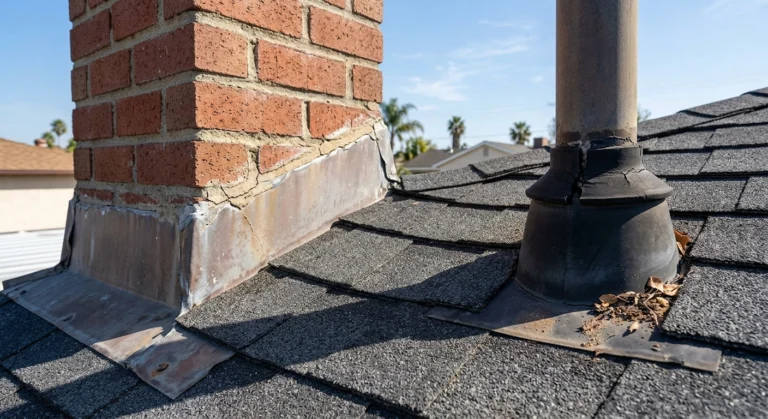
Flashing is the metal material installed around vulnerable roof areas, including chimneys, skylights, plumbing vents, and roof intersections.
Its job is to direct water away from openings and joints.
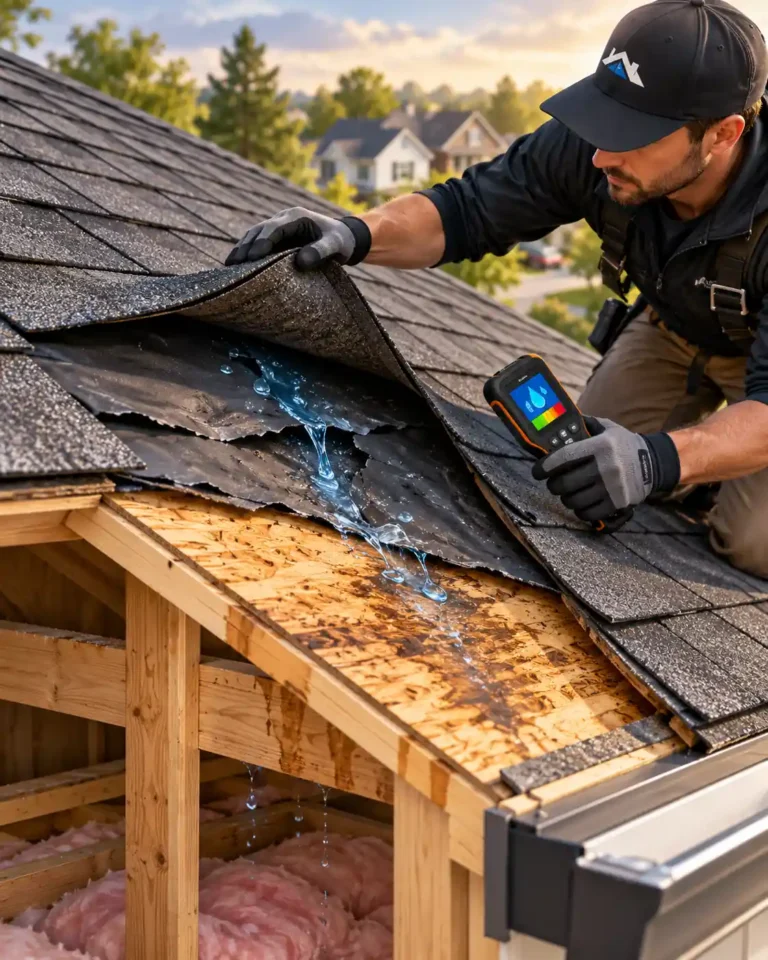
Strong winds can loosen flashing, while wind-driven rain may enter through existing gaps.
From a safe viewing point, look for bent metal, detached flashing, or visible separation around roof penetrations.
Why is flashing damage important?
A small opening around a vent pipe or chimney can allow water to reach the roof decking and attic insulation. Over time, repeated moisture exposure may damage wood and interior finishes.
Flashing problems often require professional attention because repairs must restore the roof’s waterproofing details.
5. Check Your Attic for Signs of Water Intrusion
Not all storm damage is visible from outside.
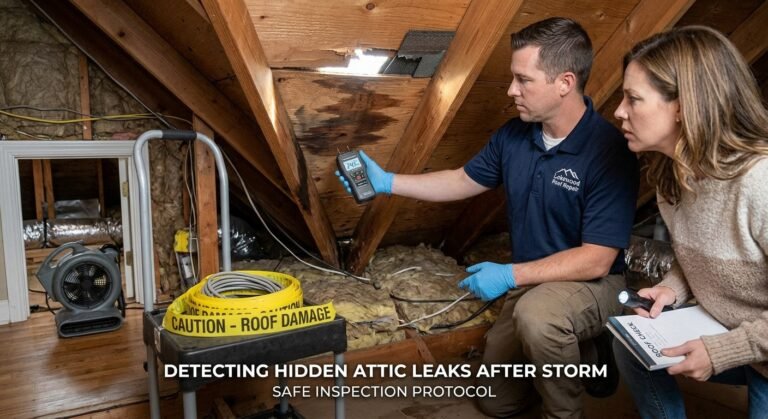
If your attic is safely accessible, inspect it during daylight hours for signs of moisture.
Look for dark stains on wooden rafters, damp insulation, water marks beneath roof penetrations, and visible daylight through unexpected openings.
A musty odor may also suggest that moisture has been present for some time.
Avoid stepping between ceiling joists or disturbing electrical wiring and insulation.
If you find wet materials or active dripping, arrange a professional inspection to locate the source.
6. Look for Ceiling Stains and Interior Water Damage
Sometimes the first sign of roof damage appears inside the house.
Check ceilings and upper walls for yellow or brown stains, bubbling paint, peeling drywall, and damp patches.
Pay close attention to areas near chimneys, skylights, and exterior walls.
However, remember that not every ceiling stain comes from the roof. Plumbing leaks, HVAC condensation, and other moisture problems can produce similar symptoms.
A proper inspection helps determine whether the damage is related to the storm or another source.
How Does Storm Damage Affect Roofs in Lakewood, CA?
Lakewood generally experiences dry summers and wetter winter months. During Southern California storm systems, gusty winds and heavy rainfall can expose weaknesses in aging roofing materials.
Homes in neighborhoods such as Lakewood Village, Lakewood Mutual, and Mayfair may have different roof ages, designs, and materials.
Older asphalt shingles can become brittle, while aging tile roofs may have deteriorated underlayment beneath otherwise intact tiles.
Windblown tree branches can also damage roofing materials, gutters, and flashing.
The important factor isn’t simply how strong the storm was. It’s the condition of your roof before the storm arrived.
Should You Repair or Replace a Storm-Damaged Roof?
Not every storm-damaged roof needs replacement.
If damage is limited to a few shingles, a section of flashing, or another isolated area, targeted repairs may be sufficient.
However, replacement may deserve consideration when the roof has widespread damage, significant material deterioration, or repeated leaks.
A professional roofer should evaluate the roof’s age, remaining service life, and overall condition before recommending major work.
For homeowners dealing with localized damage, professional roof repair in Lakewood, CA may help restore protection without replacing an otherwise serviceable roof.
Frequently Asked Questions
How soon should I inspect my roof after a storm?
Inspect the property from the ground once conditions are safe. If you notice missing roofing materials, active leaks, or structural damage, contact a roofing professional promptly.
Can strong winds damage a roof without removing shingles?
Yes. Wind can loosen adhesive seals, lift shingle edges, and weaken fasteners without completely removing the roofing material.
Will homeowners insurance cover wind damage?
Many homeowners insurance policies cover certain types of sudden wind damage, but coverage depends on the policy, exclusions, deductible, and cause of damage. Review your policy and document any visible damage.
Should I climb onto my roof to check for damage?
No. Roof surfaces can be slippery, unstable, or damaged after storms. A ground-level inspection is safer, while difficult-to-see areas should be evaluated by a qualified professional.
Protect Your Roof Before the Next Storm
Storm and wind damage isn’t always obvious. A few lifted shingles or a loose piece of flashing can go unnoticed until water begins entering your home.
After severe weather in Lakewood, take a few minutes to inspect your roof from the ground, check the gutters, and look for interior moisture stains.
If something appears damaged, don’t wait for the next rainstorm to investigate.
Roof Fort helps Lakewood homeowners address roofing problems, including damaged shingles, roof leaks, and storm-related repairs. A professional roof inspection can identify the affected areas and help you decide what repairs are actually needed.