Roof Flashing Problems in Lakewood, CA: Common Causes of Leaks Around Chimneys and Vents
If you have noticed damp spots on your ceiling near the fireplace or water marks running down an attic wall after a rainstorm, your shingles might not be at fault. Most residential roof leaks do not start in the middle of a shingle run; they start at roof penetrations—the points where your chimney, plumbing vents, exhaust pipes, and skylights break through the roof surface.
These vulnerable joints are guarded by roof flashing, thin sheets of corrosion-resistant metal or material installed to channel water away from critical seams. When flashing fails, water finds a direct path into your Lakewood home. Understanding why flashing deteriorates and how to spot problems early can save you thousands in drywall, insulation, and timber repairs.
What is Roof Flashing and Why Does It Fail?
Roof flashing is a crucial waterproofing barrier made of galvanized steel, aluminum, copper, or rubber. It is installed in the valleys and angles of your roof structure to direct rainwater into gutters rather than allowing it to seep into the underlayment.
Despite its durability, flashing is one of the most common leak sites. In Lakewood, California, flashing failure is rarely caused by heavy freezing, but rather by relentless UV radiation and thermal expansion. Southern California’s heat causes metal flashing to expand during the day and contract at night. Over time, this constant movement loosens fasteners, breaks mortar joints, and cracks protective sealants.
       [ Chimney Wall ]
             ||
  Counter    ||  <-- Mortar Joint (Counter-Flashing tucked inside)
  Flashing   ||
            // \
           //   \ <-- Overlap directs water away from joint
  Step    //     \
  Flashing ==     === [ Roof Deck / Shingles ]
Top 4 Causes of Chimney Flashing Leaks
Chimneys are particularly prone to leaks because they cut a large hole through your roof deck and join two entirely different materials: wood framing and masonry brick or stone.
+---------------------------------+---------------------------------------------------------+
| Failure Point                   | Primary Cause in Lakewood Homes                         |
+---------------------------------+---------------------------------------------------------+
| Corroded / Rusted Metal         | Salt air exposure and aged galvanized steel             |
| Cracked Counter-Flashing        | Mortar crumbling at the brick chimney connection        |
| Missing / Shifted Step Flashing | Past improper installation or severe wind lift          |
| Dried-Out Sealant               | Intense sun breaking down temporary caulking            |
+---------------------------------+---------------------------------------------------------+
1. Corroded or Rusted Metal
Older Lakewood homes often feature galvanized steel flashing. Over decades, exposure to coastal air and rain strips away the protective zinc coating, allowing rust to eat holes straight through the metal sheets.
2. Cracked or Damaged Counter-Flashing
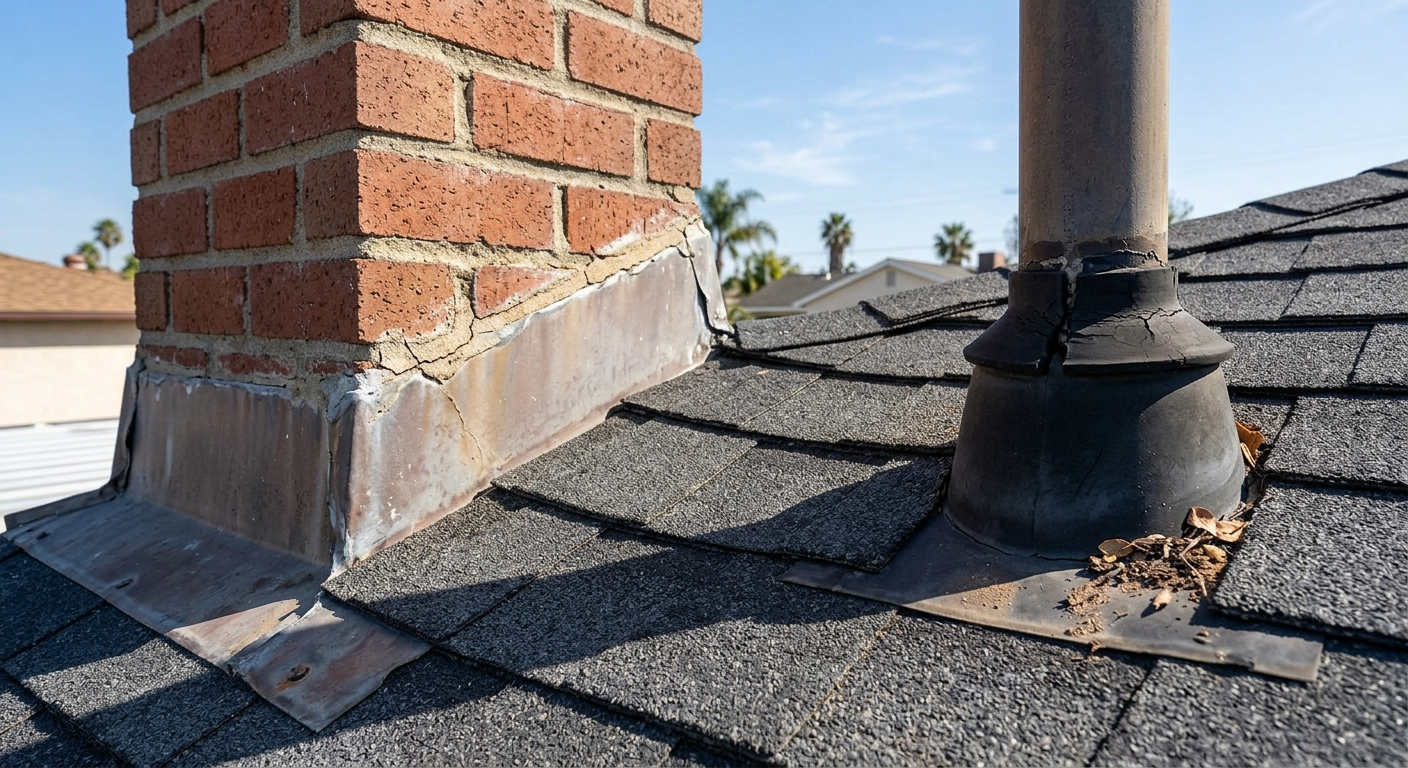
Chimney flashing uses a two-part system: step flashing woven into the shingles, and counter-flashing embedded into the chimney’s mortar joints. When the mortar around counter-flashing cracks or crumbles, water runs behind the metal plate and drips straight down into the wall cavity.
3. Missing or Worn Step Flashing
If a previous contractor rushed a roof installation, they may have reused old step flashing or failed to overlap the pieces properly. Missing or misaligned step flashing leaves open gaps along the sides of your chimney structure.
4. Dried-Out or Cracked Roofing Caulk
Roofers often apply polyurethane or silicone caulk to seal counter-flashing edges. While effective initially, Southern California’s intense sun bakes this sealant, turning it brittle, cracked, and ineffective within a few years.
Common Vent and Pipe Flashing Issues
Plumbing stack vents, bathroom fan vents, and skylights require cutouts through your roof. Each penetration uses specialized flashing that can degrade over time.
1. Deteriorated Rubber Boots and Pipe Collars
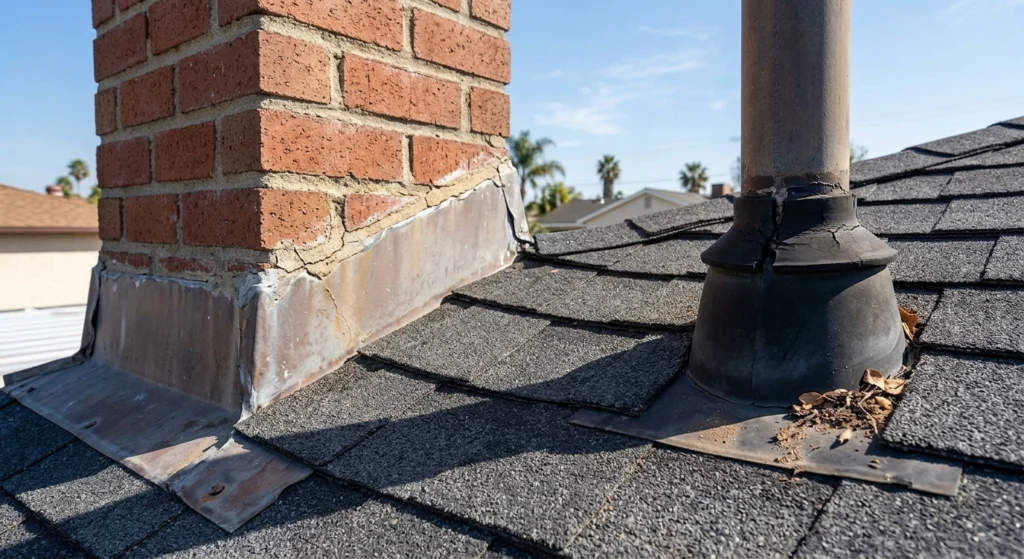
Most plumbing vents use a metal flashing base with a rubber neoprene boot that fits snugly around the pipe. UV rays cause this rubber collar to dry out, dry-rot, and split. Once split, rainwater runs right down the outside of the pipe into your attic.
2. Loose Fasteners and Nails Backing Out
Because roof decks expand and contract with temperature shifts, the nails holding vent flashing in place can slowly back out (a process called “nail popping”). Lifted nail heads create gaps beneath the flashing flange and allow water to seep in under the shingles.
3. Debris Buildup Around Vent Curbs
Windblown leaves, twigs, and dust can collect behind wide vent boxes or chimney crickets. Trapped debris holds moisture against the metal flashing seams, accelerating corrosion and leading to rot in the surrounding roof deck.
Signs Your Lakewood Home Has a Flashing Leak
Catching a flashing leak early keeps repair costs low. Keep an eye out for these telltale signs inside and outside your home:
- Ceiling Stains: Circular yellow, brown, or dark discoloration on ceilings beneath roof penetrations.
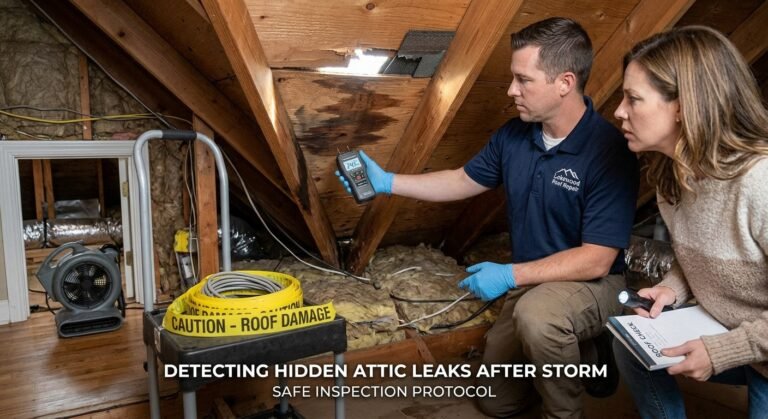
- Musty Odors in the Attic: Damp insulation or visible mold growth on wood rafters near vents or chimneys.
- Flaking Wall Paint: Peeling paint or bubbling drywall on interior walls adjacent to a chimney.
- Visible Metal Damage: Warped, rusted, or visibly separated metal strips visible from ground level.
DIY Inspection vs. Calling a Professional Roofer
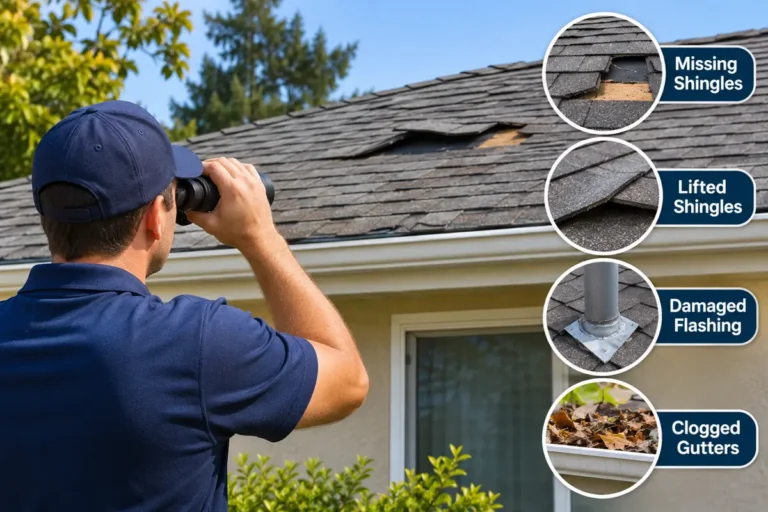
While homeowners can spot some issues from the ground using binoculars, inspecting roof flashing up close requires specialized safety gear and professional expertise.
| Inspection Type | What You Can Safely Check | Limitations & Risks |
| Ground-Level DIY | Discolored ceilings, missing vent caps, visible rust using binoculars | Cannot detect hairline sealant cracks, underlying rot, or soft roof decking. |
| Professional Roof Inspection | Step-by-step seal checks, moisture meter readings, attic sub-deck inspection | Requires climbing equipment, proper safety harnesses, and professional experience. |
How Professionals Repair Flashing Leaks
Fixing flashing is rarely a matter of applying more caulk over a leak. A permanent fix requires restoring the water-shedding system from the deck up:
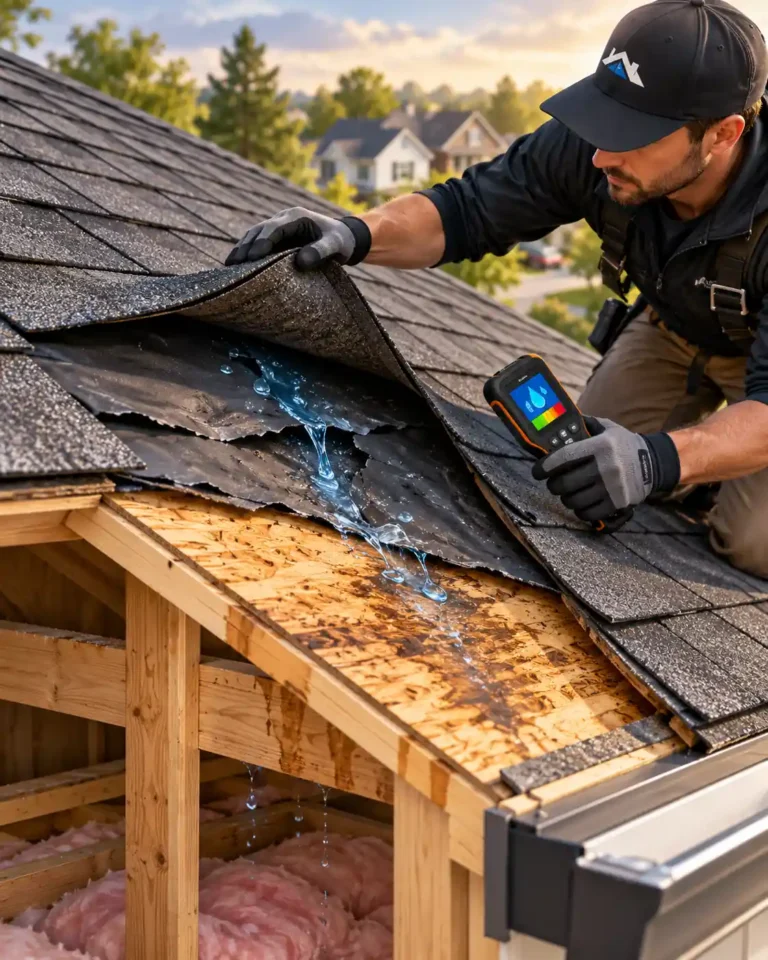
- Locating the Water Path: Tracing the leak from the interior stain back to the roof penetration (water often travels down rafters before dripping).
- Removing Shingles Around the Area: Carefully lifting adjacent shingles to expose the full flashing flange.
- Replacing Damaged Flashing: Installing new lead, copper, or heavy-gauge aluminum step flashing and counter-flashing.
- Re-sealing & Underlayment: Applying high-grade synthetic underlayment and professional-grade polyurethane sealants.
- Re-installing Shingles: Securing new or existing shingles over the new flashing to ensure water flows cleanly down the roof slope.
Frequently Asked Questions
How much does it cost to repair roof flashing around a chimney in Lakewood, CA?
Flashing repair costs typically range between $300 and $750, depending on the chimney size, roof pitch, and whether surrounding shingles need replacement. Full chimney re-flashing may run higher if masonry work is needed.
Can I use roof caulk to temporarily fix a leaking flashing boot?
Applying roofing cement or caulk can offer a temporary emergency seal, but it is not a long-term solution. The sealant will crack again as the roof expands in the heat. Replacing the damaged boot or flashing is required for a permanent repair.
How often should roof flashing be inspected in Southern California?
It is recommended to have your roof and flashing inspected at least once a year, preferably in late autumn before seasonal rains arrive.
Need Local Roof Leak Repair in Lakewood, CA?
Don’t let a small flashing defect lead to major interior water damage. The experienced team at Roof Fort provides thorough inspections, emergency leak repairs, and flashing replacements across Lakewood and surrounding neighborhoods.